On this page
Virtual staging has changed property marketing, but powerful technology comes with a responsibility to use it ethically and transparently. Misleading a buyer isn't just bad practice. It undermines the trust your brand is built on.
Do: always disclose AI virtual staging
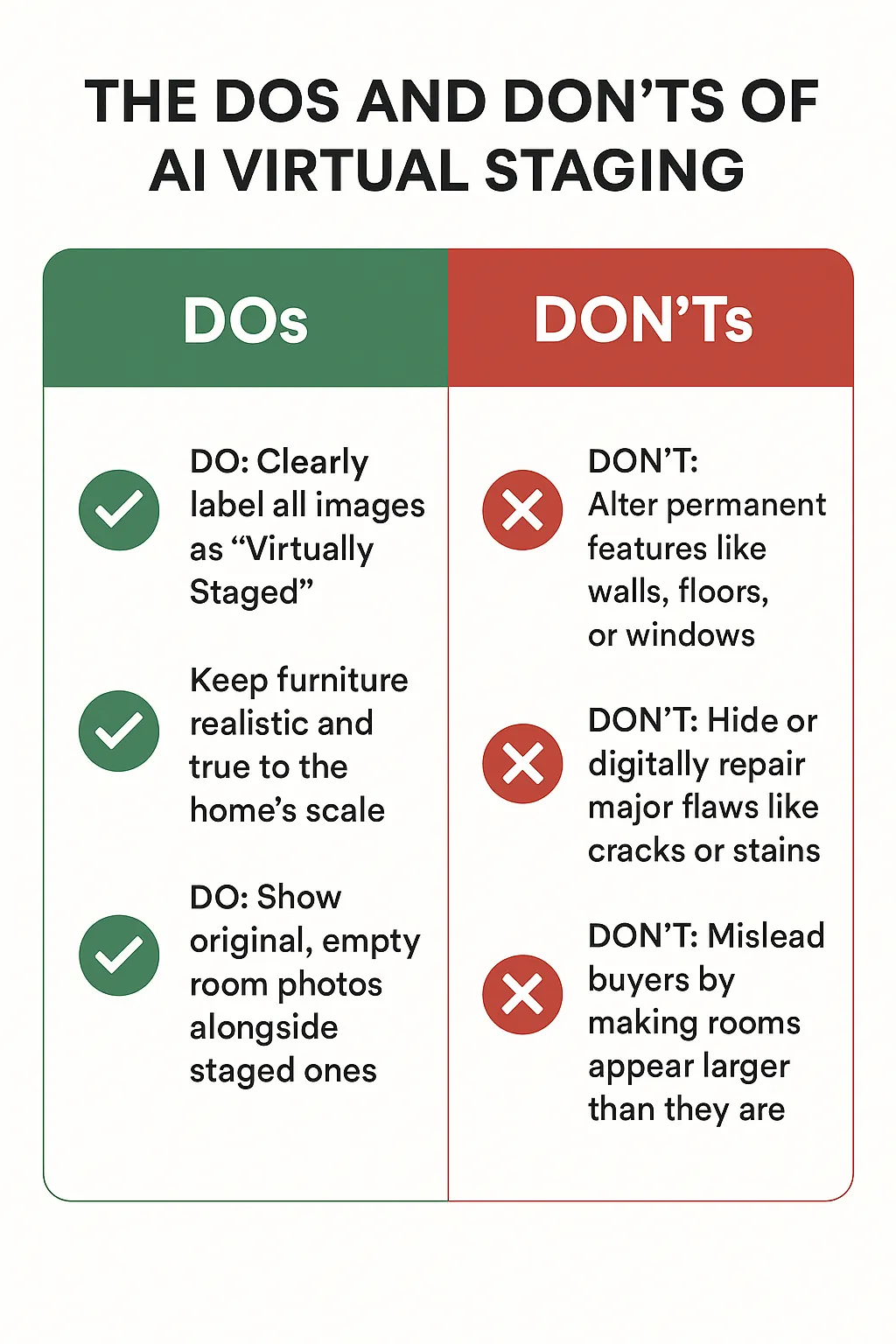
This is the golden rule. Transparency builds trust. Every virtually staged image should be clearly labeled with a "Virtually staged" watermark. Buyers need to know they are looking at a digital representation, not the property's current physical state.
Don't: alter the property's permanent features
Virtual staging is for decor, not virtual renovation. Never change the physical structure or permanent fixtures without explicit disclosure.
- Don't remove structural walls to suggest more space.
- Don't digitally replace flooring without labeling the image as a "vision rendering".
- Don't change window sizes or architectural features.
- Don't paint over significant structural damage or environmental issues.
Do: keep it realistic
Plausibility protects the integrity of the space. Scale furniture to the room's real dimensions and match the style to the property's character. A giant sectional in a small studio creates a false impression that breaks trust during the viewing.
Do: provide "before" photos
Best practice: always include the "before" photos. Showing the original empty space next to the staged version prevents any "bait-and-switch" feeling and respects the home's current condition.
The bottom line: enhancement, not deception
Follow these rules and you get the full benefit of AI while keeping your professional integrity. Stager AI's virtual staging is built on the same principle: enhance, don't deceive. To see why staging has become such an effective listing tool, read how AI virtual staging became real estate's most powerful marketing tool.
Frequently asked questions
Yes. Every virtually staged image should be clearly labeled with a "Virtually staged" watermark. Real estate boards often treat a failure to disclose as deceptive advertising.
Virtual staging is for decor. Don't remove structural walls, change window sizes or replace flooring without labeling the image as a vision rendering, and never cover up structural damage.
Yes. Showing the original empty space next to the staged version prevents a bait-and-switch feeling and respects the home's current condition.