On this page
The "HGTV effect" and the first impression
In today's market, the first showing happens on a screen. This "HGTV effect", named after the US home makeover TV channel, is a powerful force. Buyers now expect listings to look as polished as a TV renovation show, and many are disappointed when they don't.
- of agents say buyers expect homes to look like they were staged for TV
- 48%
- of agents say buyers feel immediate disappointment when a property falls short of that standard
- 58%
- of buyers' agents say staging helps buyers visualize a space as their future home
- 83%
Data consistently shows that staging is the solution. However, as the cost of traditional staging soars, digital alternatives offer a budget-friendly shift. So is home staging worth it, and which kind?

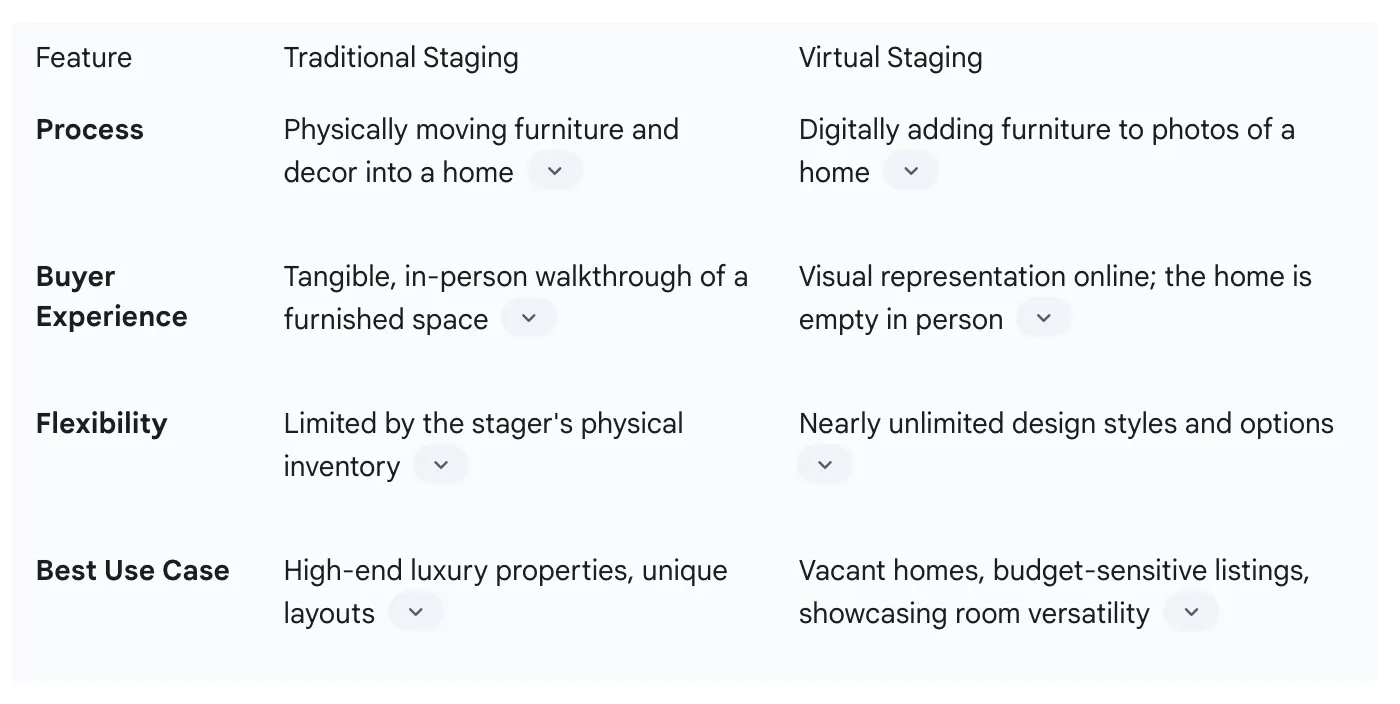
Physical vs. digital staging
Traditional staging is a tangible, logistical process that uses rented furniture for in-person tours. Virtual staging is a technology-driven tool where AI adds furniture and decor to your listing photos. It is significantly more affordable, often over 90% cheaper than physical staging.
The financial landscape of staging
Professional staging costs have surged from $400 in 2019 to $1,500 in 2026. Meanwhile, virtual staging remains scalable at $19–$99 per photo. That creates a large gap in return on investment: traditional staging yields 102%–909%, while virtual staging delivers 500%–3,650%.
Buyer psychology and ethics
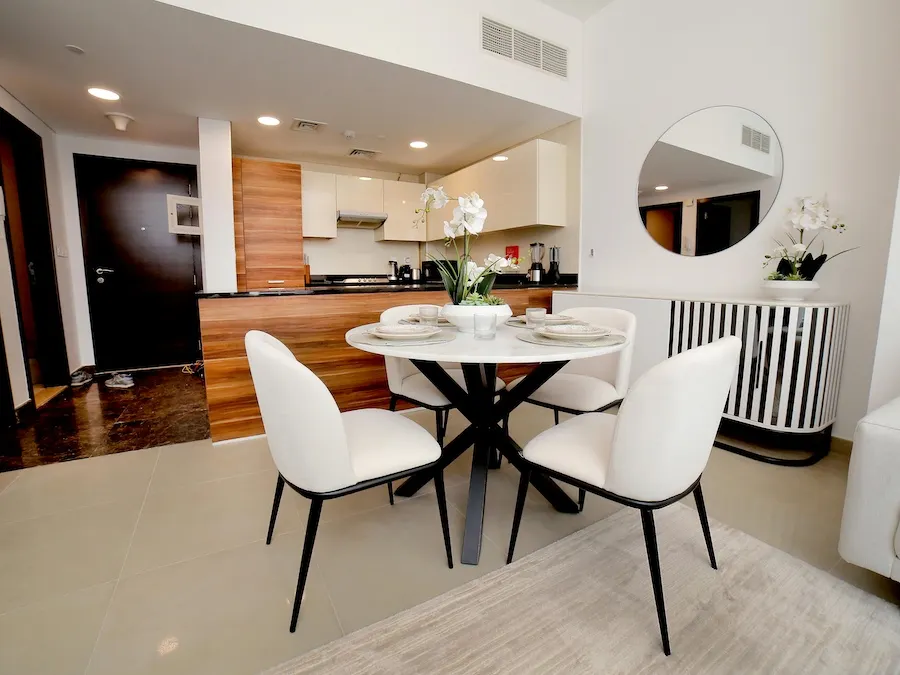
The advantage of physical staging is tangibility, especially in luxury markets. The challenge of virtual staging is the "digital disconnect" when a buyer walks into an empty room. The solution is full transparency: always disclose digital enhancements with a "Virtually staged" label to maintain trust.
The verdict: is home staging worth it?
Yes, but the right tool depends on the listing. Traditional staging is turning into a niche luxury service. For the vast majority of listings, virtual staging is the most logical, cost-effective and flexible option in today's real estate market.
For a closer look at the digital option, read is virtual staging worth it? and how much virtual staging costs.
Frequently asked questions
Professional staging costs have risen from $400 in 2019 to $1,500 in 2026.
Virtual staging costs $19–$99 per photo, often over 90% cheaper than physical staging.
Traditional staging yields an ROI of 102%–909%, while virtual staging delivers 500%–3,650%. Virtual staging also reduces days on market by 73%, from 90 days to 24.
Yes. Always disclose digital enhancements with a "Virtually staged" label to maintain trust and avoid a disconnect when buyers visit the empty room.