On this page
Big rooms almost photograph themselves. Small ones don't. In a narrow bedroom or a compact bathroom there's nowhere to stand, the wide lens bends everything at the edges, and every mirror shows your camera. Knowing how to photograph small rooms for real estate is mostly about where you put the camera, and what you leave to the edit.
This guide covers small bedrooms, box rooms and bathrooms: position, lens, height, mirrors, light and the finishing touches. The values are common starting points, not rules.
Where to stand in a small room
- Corners first. A corner shows two walls and the diagonal of the room, which makes it read as bigger than a straight-on shot.
- The doorway. In box rooms and bathrooms, the doorway is often the only spot with any distance. Put the tripod right at the frame, or just outside it.
- One good angle beats two cramped ones. Small rooms rarely need more than one or two photos.
Lens and camera height for tight spaces
Small rooms tempt you to go as wide as the lens allows. A little wider helps; too wide stretches the bed or the toilet at the edges and makes the room look strange, and lens correction can't undo that stretch. Many photographers work around 16 to 24 mm on full frame and go wider only in the smallest bathrooms.
Height matters more in small rooms than big ones. Around counter height suits bathrooms, so you see the vanity and the floor instead of the ceiling; in small bedrooms, a little below chest height keeps the bed in proportion. Keep the camera level so walls stay straight. See best camera settings for real estate photography for the rest of the setup.
Real estate bathroom photography
- Toilet lid down, toiletries and towels tidied away, one set of matching towels on show.
- Shower screens and mirrors wiped, because every streak shows against the light.
- Lights on, including mirror lights, which add warmth and depth.
- Shoot the vanity and the shower or bath together where you can, so buyers see the layout.
- Close the door behind you if you can't avoid it, and watch for your feet in the frame.
Mirrors
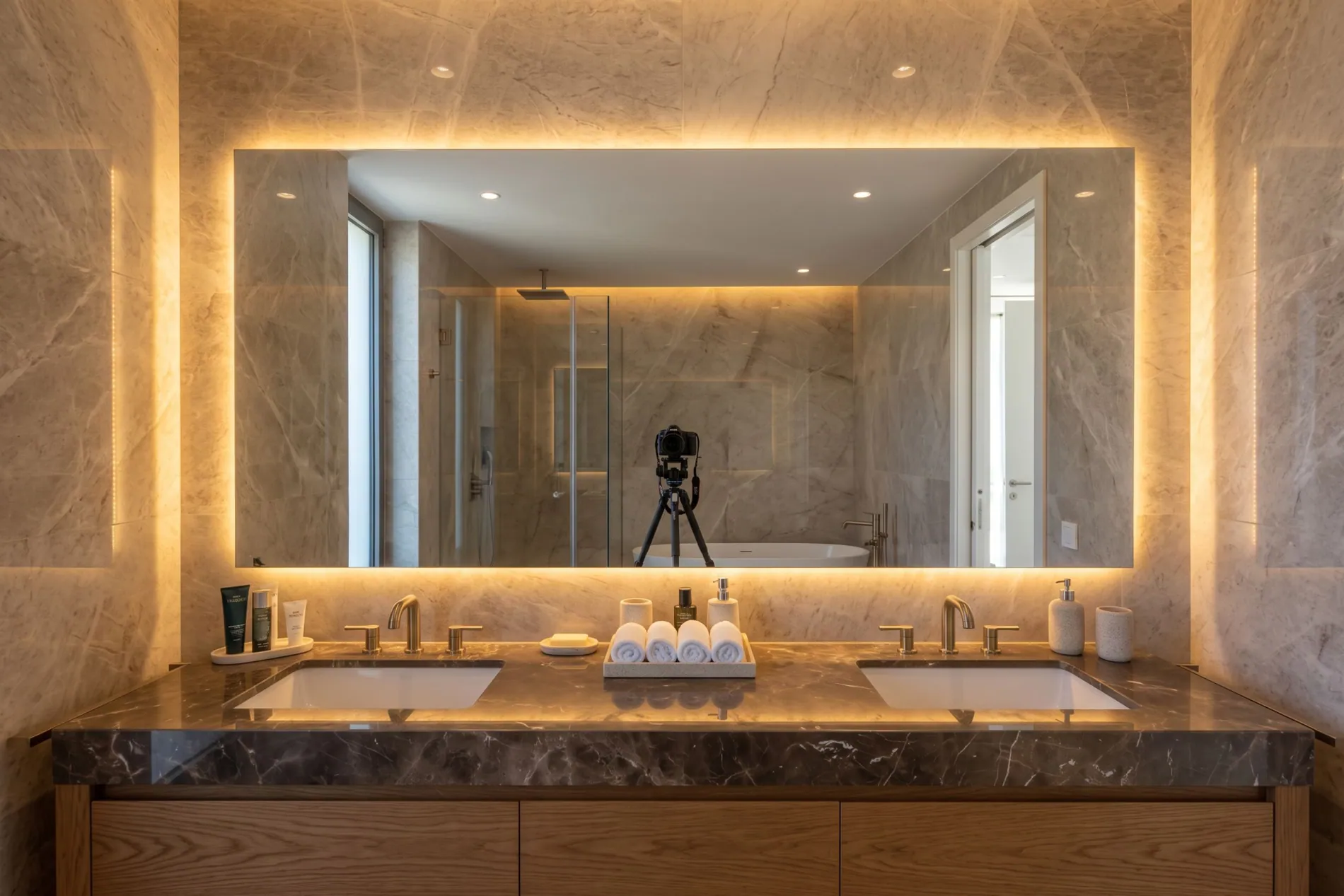
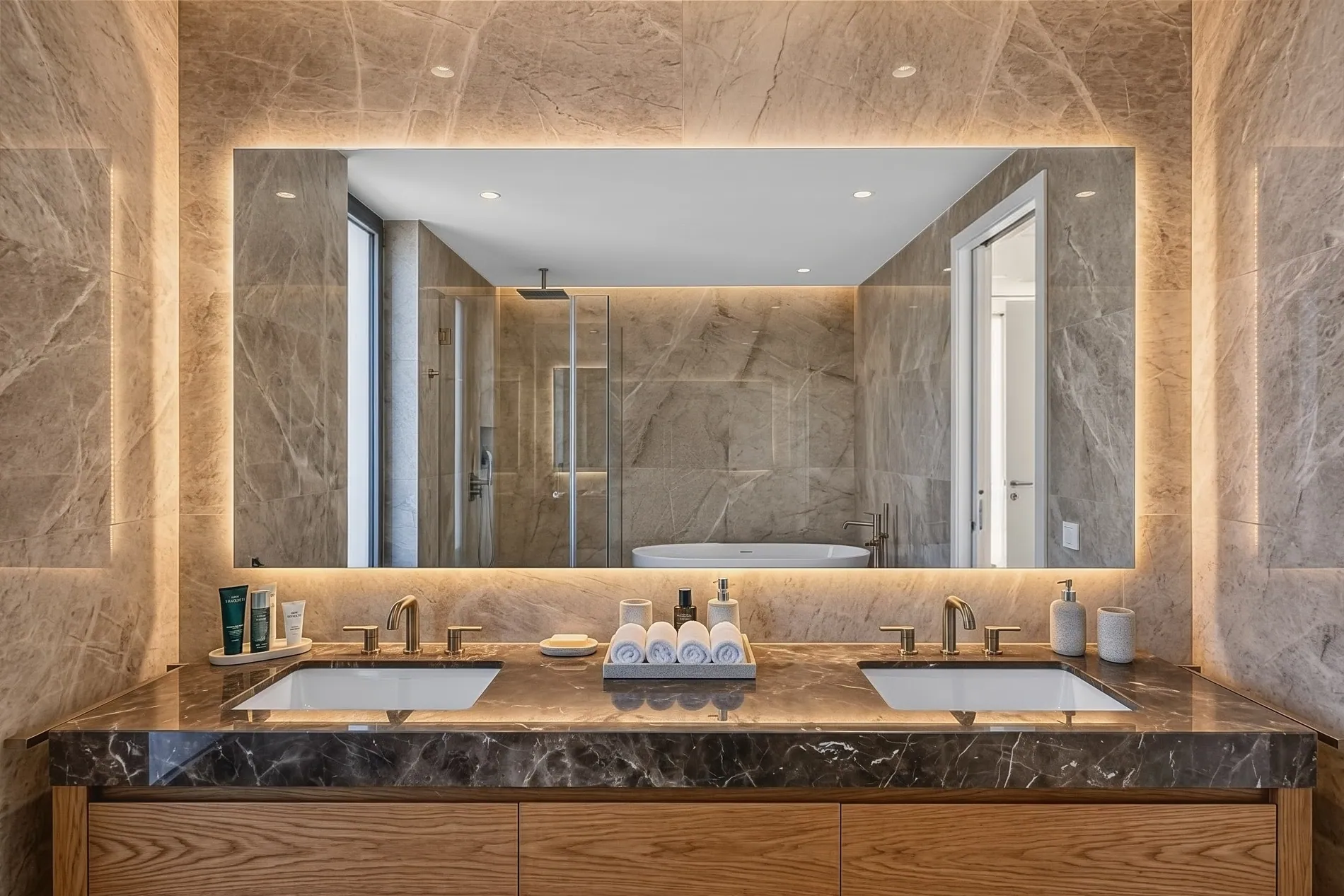
Mirrors are the hardest part of bathroom photography. Shoot at an angle to the mirror rather than straight on, so it reflects a wall or the shower instead of you. When there's no angle that hides the camera, Photographer & Camera Removal in Stager AI Auto HDR removes the camera, the tripod and you from mirrors and glass, and rebuilds the room behind. We cover the techniques in detail in how to remove your reflection from mirrors and windows.
Light in small rooms
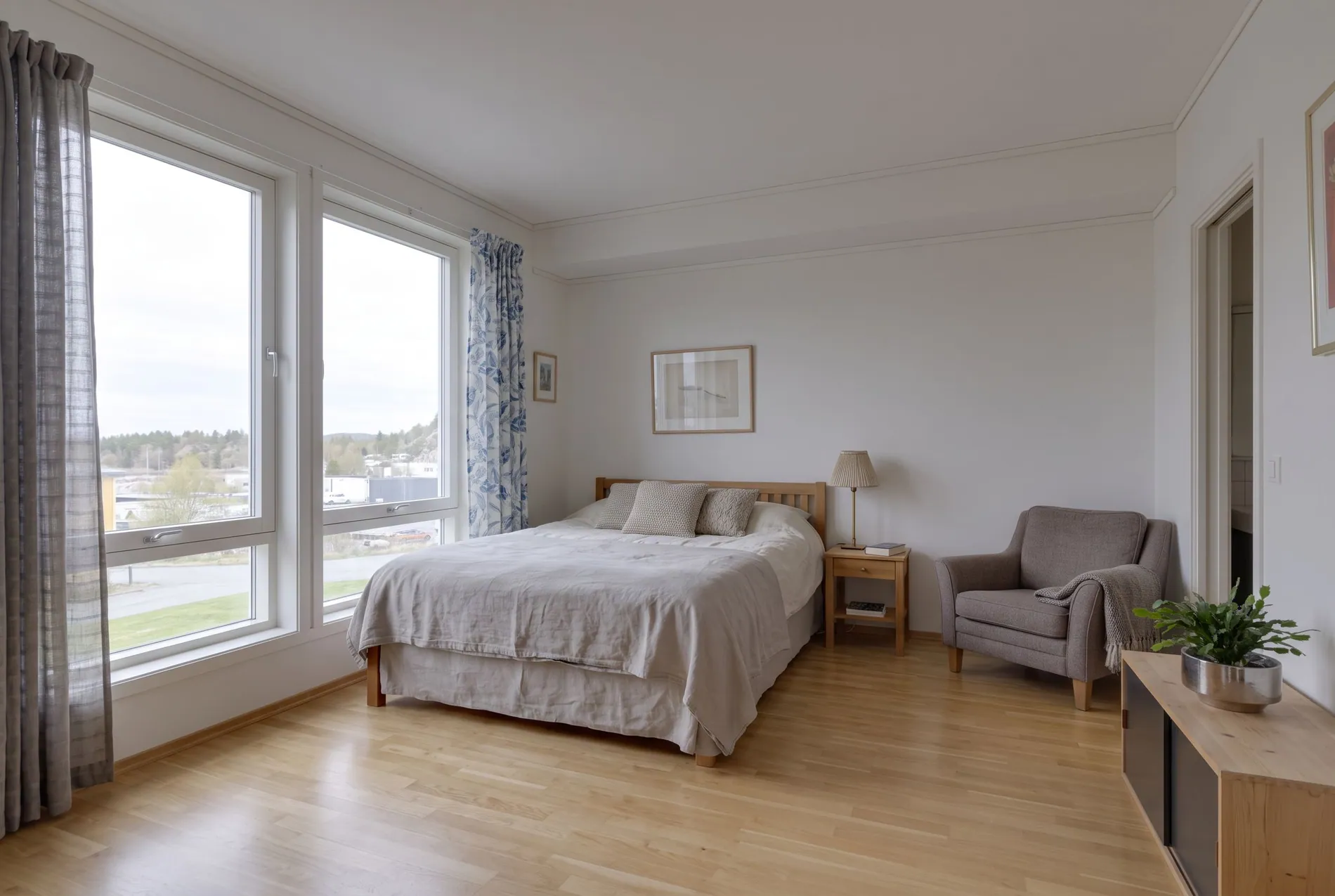
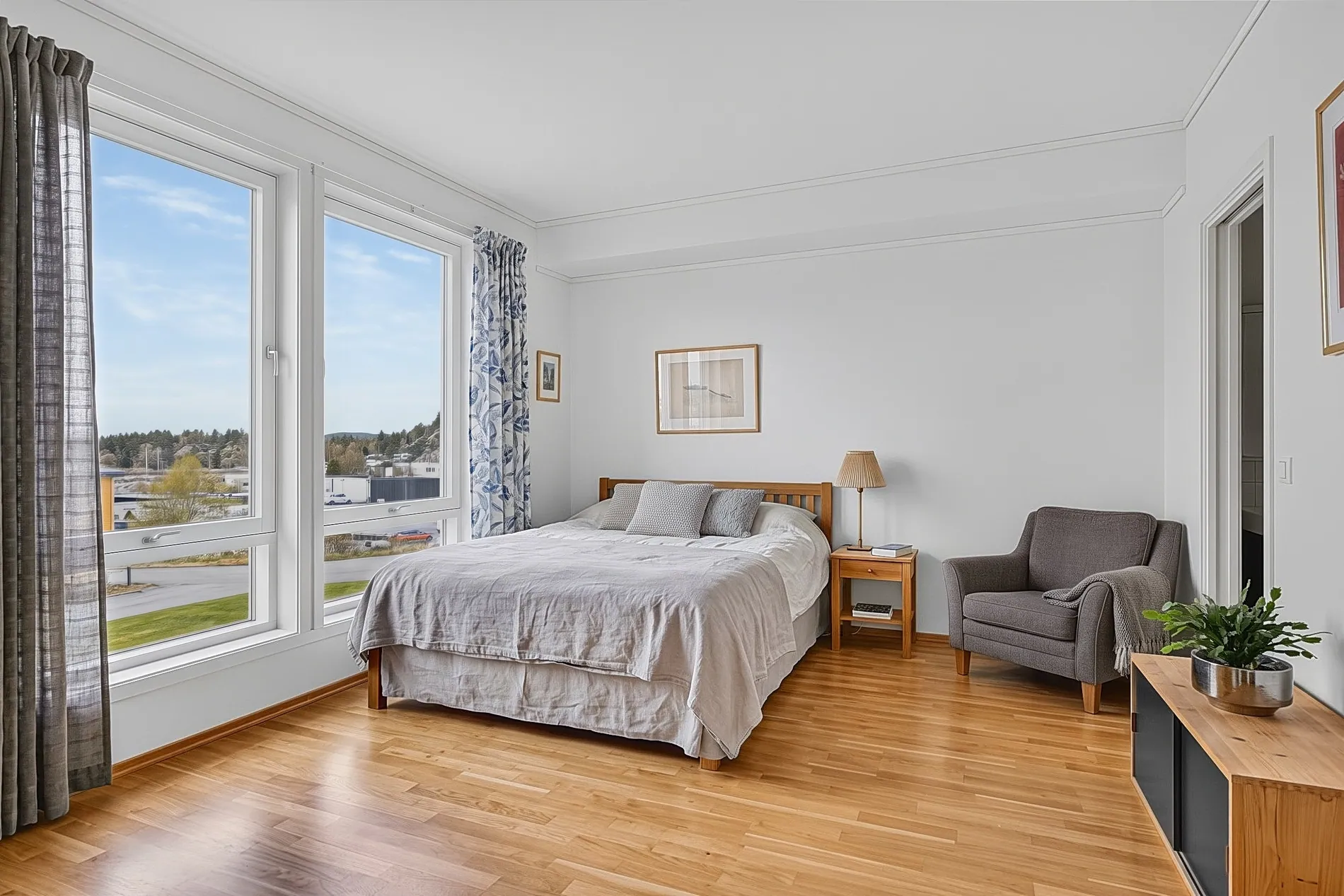
Small rooms are often the darkest in the house, with one small window or none. Turn on every light, open the blind, and bracket deep enough to keep the window view; see how many brackets for real estate photography. Mixed bulbs cause color casts quickly in tight spaces, so match bulbs where you can.
Small bedrooms and box rooms
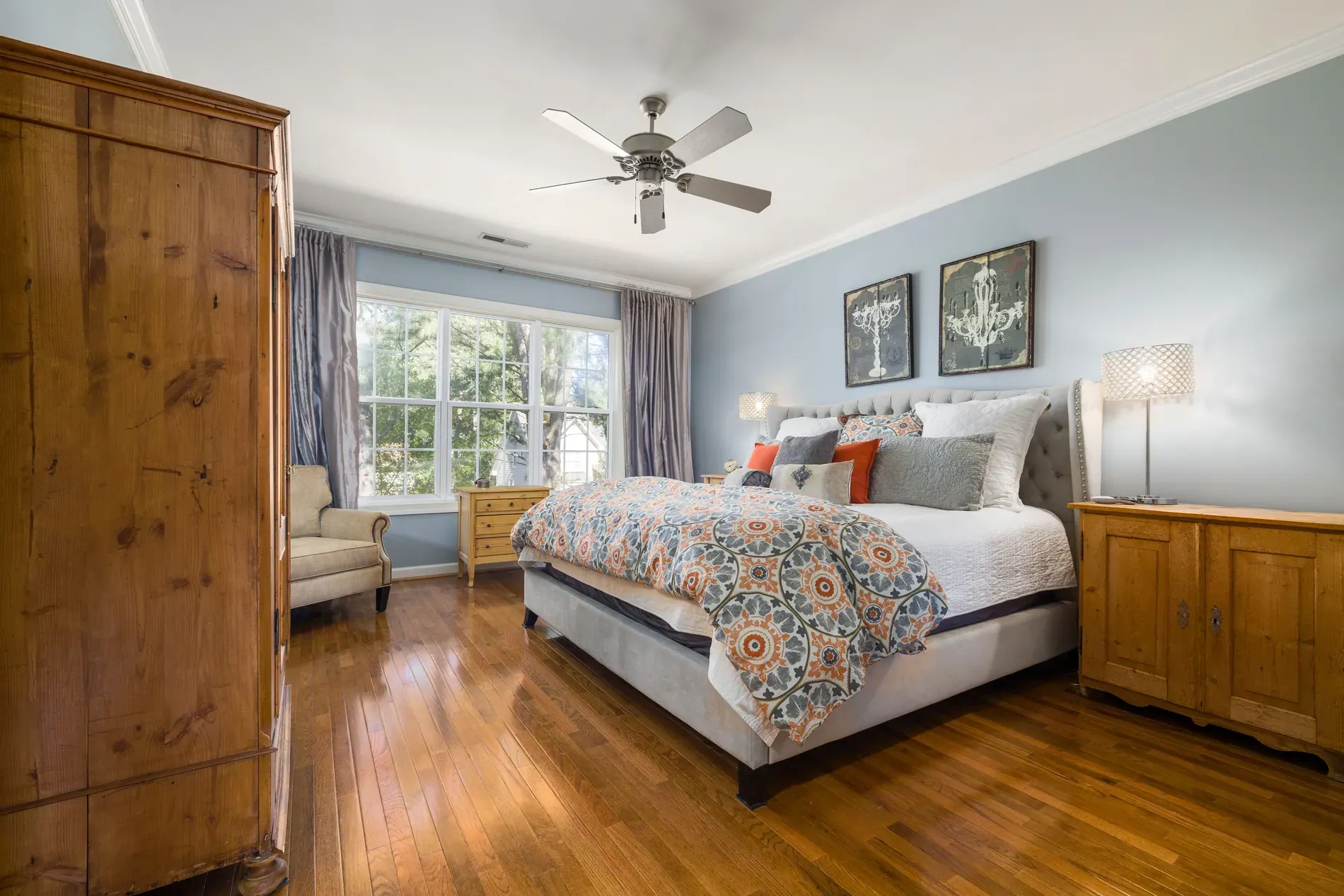
An empty small room looks even smaller in photos, and buyers can't tell what fits. A bed shows scale; a desk turns a box room into an office. If the room is empty, virtual staging shows what it can hold; if it's full of the seller's things, decluttering first helps. See declutter, stage or show it empty.
Frequently asked questions
Shoot from the doorway or a corner at around counter height, keep the camera level, turn every light on and angle away from the mirror. Remove any remaining reflection in editing.
Many photographers work around 16 to 24 mm on full frame and go wider only in the smallest bathrooms. Too wide stretches furniture at the edges.
Shoot at an angle to the mirror and stand outside the frame with a remote. If the camera still shows, Photographer & Camera Removal in Stager AI removes it and rebuilds the area behind.
Often yes. An empty small room looks smaller in photos, and a bed or desk shows buyers what fits. Label staged photos where your portal asks.